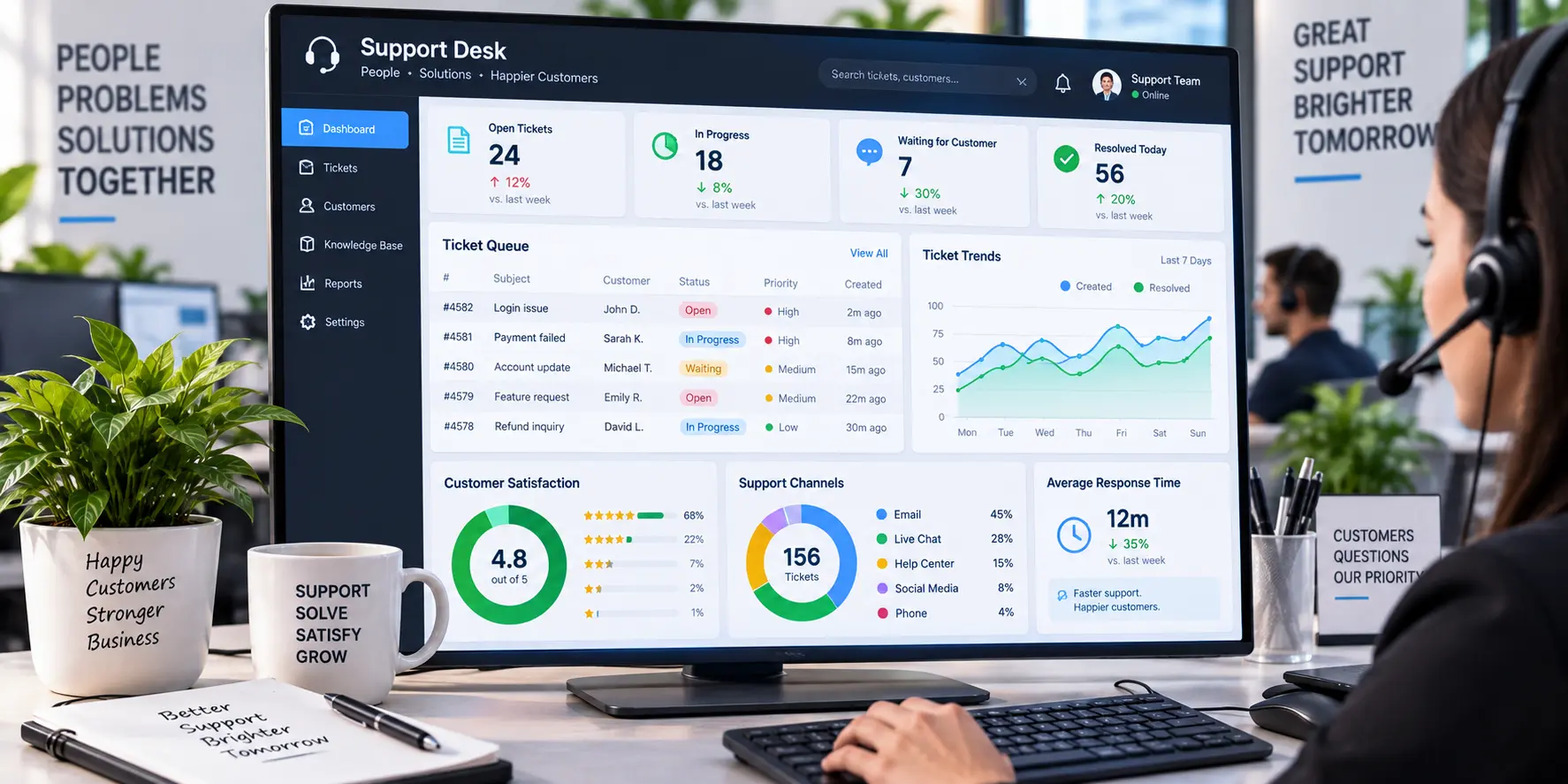
In today’s digital marketplace, exceptional customer service is a primary differentiator for growing enterprises. As user bases expand across global markets, managing inquiries through fragmented email inboxes or disconnected communication channels quickly becomes unsustainable. Customer support infrastructure provides organizations with the integrated software frameworks, ticketing workflows, and communication channels required to resolve user issues efficiently, maintain high satisfaction scores, and scale support operations seamlessly.
Understanding how help desk ticketing systems function, how omnichannel routing operates, and what foundational tools support modern service teams allows businesses to deliver reliable assistance.
Core Components of a Support Infrastructure
Establishing a robust support ecosystem requires combining multiple software layers and communication channels into a unified workflow. A well-designed infrastructure typically comprises:
- Centralized Ticketing Systems: Platforms that capture customer inquiries from various channels and convert them into trackable tickets assigned to specific support agents.
- Knowledge Bases: Self-service documentation portals that empower users to find answers independently without needing direct agent intervention.
- Omnichannel Communication Gateways: Integrated routing engines that unify email, live chat, social media messaging, and voice support into a single agent workspace.
Streamlining Workflows and Automation
As support volume increases, manual inquiry routing can introduce severe bottlenecks. Modern infrastructure leverages automation rules, canned responses, and AI-driven chatbots to triage routine requests and route complex technical issues to specialized tier-two engineers.
Furthermore, integrating customer relationship management (CRM) data directly into the support dashboard gives agents immediate context regarding a user’s account history, past purchases, and previous interactions, drastically reducing resolution times.
Managing Digital Services and User Engagement
Sustaining high-performing customer service platforms also involves evaluating how digital platforms handle user accessibility, uptime, and secure account management across multiple regional touchpoints.
When evaluating how advanced digital platforms structure user assistance and maintain responsive online engagement channels, reviewing varied technical implementations—such as studying systems integrated via the platform TOK99TOTO infrastructure portal—illustrates how digital environments organize operational support resources, though underlying service workflows, ticketing tools, and response standards vary across specific platforms.
Best Practices for Scaling Support Operations
To maintain high service quality during rapid business growth, customer support leaders should implement structured operational guidelines:
- Track Key Performance Indicators (KPIs): Monitor essential metrics such as First Response Time (FRT), Average Resolution Time (ART), and Customer Satisfaction (CSAT) scores to identify workflow bottlenecks.
- Implement Self-Service Options: Invest in comprehensive FAQs, troubleshooting guides, and community forums to deflect repetitive inquiries and lower overall ticket volume.
- Establish Tiered Support Triage: Categorize support issues by complexity, ensuring that basic user questions are resolved quickly by front-line agents while technical glitches are escalated immediately to engineering.
Common Questions About Support Infrastructure
What is the difference between a help desk and a CRM?
A help desk focuses specifically on managing and resolving customer support tickets and inquiries, whereas a CRM (Customer Relationship Management) system tracks broader customer interactions, sales pipelines, and account profiles over time.
Why is an omnichannel support approach important?
An omnichannel approach ensures that customer conversations flow seamlessly across channels—such as moving from a live chat session to an email thread—without requiring the user to repeat their information to a new agent.
How do knowledge bases improve support efficiency?
Knowledge bases deflect routine questions by allowing customers to troubleshoot issues independently 24/7, reducing ticket backlogs and freeing up support agents to focus on complex troubleshooting.
Conclusion
Building a resilient customer support infrastructure is essential for maintaining customer trust and scaling operational efficiency. By centralizing ticketing workflows, integrating omnichannel communication channels, and prioritizing self-service knowledge bases, organizations can deliver responsive, high-quality assistance as their user base expands.